Midtown North Architecture Tour

Explore New York’s architecture and urban life through architect-led walking tours and experiences.

Tour Overview

Explore the architectural heart of New York City through an immersive architect-led walking tour of Midtown North, where some of the world’s most influential buildings, public spaces, and cultural institutions converge within a remarkably dense urban landscape.

This tour traces the evolution of Midtown Manhattan from the rise of luxury avenues and grand civic institutions to the emergence of modernism, corporate architecture, postmodernism, and the contemporary supertall skyline. Moving through Fifth Avenue, Park Avenue, Rockefeller Center, and the streets surrounding MoMA, the experience reveals how New York continuously reinvented itself through architecture, culture, commerce, and urban development.

Few places in the world concentrate so many architectural landmarks within such a compact area. From St. Patrick’s Cathedral and Rockefeller Center to the modernist icons of Park Avenue and the contemporary towers of Billionaires’ Row, the tour traces more than a century of architectural innovation and urban transformation.

The tour explores how changing technologies, corporate culture, luxury development, and global capital shaped Midtown North into one of the most influential architectural districts in the world. Today, the neighborhood remains a powerful expression of New York’s ambition, adaptability, and capacity for reinvention.
Choose Your Experience

Choose the experience format that best fits your interests, schedule, and group size.

Public Tour

Small groups up to 10 guests
Duration: 2 hours
Language: English
Adults $59, Youth $39

Private Tour

Flexible Size and Scheduling
Duration: 2 / 4 / 6 hours
In English, Spanish, Italian & French
Starting at $399

Group Program

Customized itineraries and themes
From 2 hours to multiple days
In English, Spanish, Italian & French
Price by request

Tour Highlights

St. Patrick’s Cathedral (James Renwick Jr., 1879)
One of New York City’s most iconic landmarks, St. Patrick’s Cathedral is a masterpiece of Neo-Gothic architecture that creates a dramatic contrast with Midtown Manhattan’s surrounding skyscrapers.

Rockefeller Center / RCA Building (Raymond Hood and Associated Architects, 1930–1939)
One of the world’s most influential urban developments, Rockefeller Center combines Art Deco architecture, public space, media, commerce, and culture into a unified vision of the modern metropolis.

Museum of Modern Art – MoMA (Goodwin & Stone, 1939; Philip Johnson, 1964; César Pelli, 1984; Yoshio Taniguchi, 2004; Diller Scofidio + Renfro, 2019)
One of the world’s leading museums of modern and contemporary art, shaped through multiple architectural transformations spanning the 20th and 21st centuries.

Seagram Building (Mies van der Rohe with Philip Johnson, 1958)
Widely regarded as one of the most important modernist skyscrapers ever built, the Seagram Building transformed corporate architecture and established new standards for towers and urban plazas worldwide.

550 Madison Avenue / AT&T Building (Philip Johnson and John Burgee, 1984; renovation by Snøhetta, 2022)
Philip Johnson’s iconic postmodern tower, originally designed as the AT&T Building, redefining the relationship between corporate architecture, symbolism, and historical reference.

Apple Fifth Avenue Store (Bohlin Cywinski Jackson, 2006; renovation by Foster + Partners, 2019)
A globally recognized retail and public space landmark defined by its minimalist glass cube and seamless integration of architecture, technology, and urban experience.

View Full List of Buildings and Sites on this Tour

Historic Religious and Civic Architecture
St. Patrick’s Cathedral (James Renwick Jr., 1879)
St. Thomas Church (Ralph Adams Cram, 1914)
Villard Houses (McKim, Mead & White, 1886)
University Club (McKim, Mead & White, 1899)
Cartier Mansion (James T. Townsend, 1905)
St. Regis Hotel (Trowbridge & Livingston, 1904)
Peninsula Hotel / Gotham Hotel (Hiss & Weekes, 1905)
Plaza Hotel (Henry Janeway Hardenbergh, 1907)
Racquet & Tennis Club (McKim, Mead & White, 1918)
Bergdorf Goodman Building (1928)


Art Deco Architecture and Rockefeller Center

RCA Building / 30 Rockefeller Plaza (Raymond Hood and Associated Architects, 1933)
Rockefeller Center (Raymond Hood, H.W. Corbett, and Associated Architects, 1930–1939)
Tiffany & Co. Building (Cross & Cross, 1940; OMA expansion, 2023)

Modern Architecture and the International Style
Museum of Modern Art – MoMA (Goodwin & Stone, 1939; Philip Johnson, 1964; César Pelli, 1984; Yoshio Taniguchi, 2004; Diller Scofidio + Renfro, 2019)
Lever House (Gordon Bunshaft, SOM, 1952–1953)
Seagram Building (Mies van der Rohe with Philip Johnson, 1958)
CBS Building / Black Rock (Eero Saarinen, 1965)
Solow Building (Skidmore, Owings & Merrill, 1974)
Saint Peter’s Church (Hugh Stubbins and Easley Hamner, 1977)
Citigroup Center (Hugh Stubbins and William LeMessurier, 1978)
Park Avenue Plaza (Skidmore, Owings & Merrill, 1981)
IBM Building (Edward Larrabee Barnes, 1982)

Postmodern Architecture
Paley Center for Media (Philip Johnson, 1976)
550 Madison Avenue / AT&T Building (Philip Johnson and John Burgee, 1984; renovation by Snøhetta, 2022)
Lipstick Building (Philip Johnson and John Burgee, 1986)

Contemporary Architecture and Supertall Development
Austrian Cultural Forum (Raimund Abraham, 2002)
53 West 53 / MoMA Expansion Tower (Jean Nouvel, 2007–2019)
432 Park Avenue (Rafael Viñoly, 2015)
Apple Fifth Avenue Store (Bohlin Cywinski Jackson, 2006; renovation by Foster + Partners, 2019)
Selene / 100 East 53rd Street (Foster + Partners, 2019)
425 Park Avenue (Foster + Partners, 2022)
Rolex Building (David Chipperfield Architects, 2025)
Steinway Tower / 111 West 57th Street (SHoP Architects, 2022)
One57 (Christian de Portzamparc, 2014)
Central Park Tower (Adrian Smith + Gordon Gill Architecture, 2020)

Parks, Plazas, and Public Space
Rockefeller Center Channel Gardens
The Museum of Modern Art Sculpture Garden
Paley Park
550 Madison Avenue Garden
Central Park South

Public Art and Urban Landmarks
Prometheus Sculpture at Rockefeller Center (Paul Manship, 1934)
Atlas Sculpture at Rockefeller Center (Lee Lawrie, 1937)
News (Isamu Noguchi, 1938)
Plaza Hotel Fountain

Itinerary

Meeting Point: St. Patrick’s Cathedral

This walking tour explores Midtown North through a sequence of landmark buildings, luxury avenues, corporate towers, cultural institutions, and public spaces, revealing how architecture transformed this district into one of Manhattan’s most influential cultural, commercial, and architectural districts.

St. Patrick’s Cathedral and Fifth Avenue
We begin at St. Patrick’s Cathedral, where the Neo-Gothic grandeur of James Renwick Jr. ‘s masterpiece stands in dramatic contrast to the surrounding commercial skyline. Along Fifth Avenue, historic mansions, private clubs, luxury hotels, and cultural institutions reveal how Midtown emerged as one of New York’s most prestigious districts during the late 19th and early 20th centuries.

Rockefeller Center and Art Deco Urbanism
Moving west toward Rockefeller Center, we explore one of the most influential urban developments of the 20th century. Through its landmark towers, public spaces, and integrated artworks, we examine how architecture, media, commerce, and public life were brought together in a cohesive vision of the modern metropolis.

MoMA and the Evolution of Modern Architecture
Around the Museum of Modern Art and the surrounding streets, we trace the evolution of modern and contemporary architecture in Midtown North. Buildings such as MoMA, the CBS Building, the Austrian Cultural Forum, Bloomberg Tower, and 53 West 53 reveal changing ideas about culture, technology, minimalism, and urban identity across the 20th and 21st centuries.

Park Avenue and Corporate Modernism
Continuing east toward Park Avenue, we encounter some of the world’s most influential examples of corporate modernism. Through landmarks such as Lever House, the Seagram Building, the Racquet & Tennis Club, Citigroup Center, IBM Building, and 425 Park Avenue, we explore how the International Style transformed New York’s skyline and redefined the relationship between towers, plazas, transparency, and corporate identity.

Postmodernism and the Reinvention of the Skyline
Along Madison and Fifth Avenue, the tour examines the shift from modernism to postmodern and contemporary architecture through buildings such as 550 Madison Avenue, the Louis Vuitton Building, and nearby luxury developments. These projects reveal how symbolism, branding, and sculptural expression re-emerged in the architecture of Midtown Manhattan.

Billionaires’ Row and the Contemporary Skyline
Along 57th Street, projects such as the Apple Fifth Avenue Store and the Rolex Building illustrate how luxury retail architecture shapes the contemporary experience of Midtown. Nearby, supertall towers including Steinway Tower, Central Park Tower, One57, and 432 Park Avenue demonstrate how engineering innovation, zoning regulations, luxury development, and global capital continue to redefine New York’s skyline.

Ending Point: Apple Fifth Avenue Store

Key Themes

The Transformation of Fifth Avenue
Explore how Fifth Avenue evolved from a corridor of mansions and institutions into one of the world’s most important centers of luxury, culture, and commerce.

Rockefeller Center and the Modern Metropolis
Examine how Rockefeller Center redefined urban development by integrating architecture, media, public space, and commercial activity into a unified vision of the modern city.

Modernism, Corporate Power, and the Skyline
Through landmarks such as Lever House, the Seagram Building, and the CBS Building, discover how modern architecture transformed Midtown into a global center of corporate identity and urban modernity.

Art, Culture, and Architectural Innovation
Trace the influence of MoMA and surrounding cultural institutions in shaping architectural discourse from modernism to contemporary design.

Supertalls, Global Capital, and the Future of New York
From Billionaires’ Row to contemporary mixed-use developments, explore how engineering innovation, zoning, luxury development, and global investment continue to redefine Manhattan’s skyline.

Meet Your Architect Guides

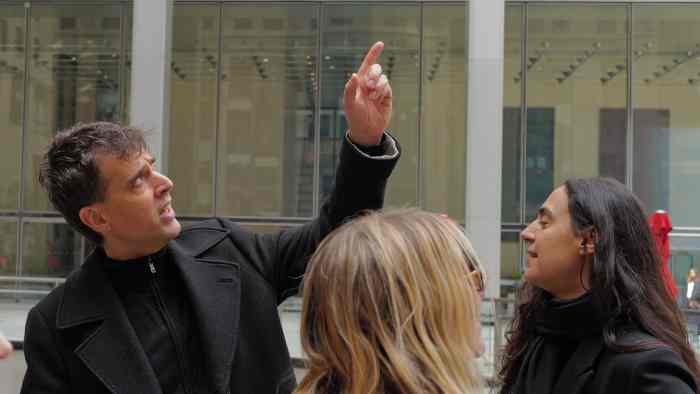
Our tours are led by architects and urban experts with deep knowledge of New York’s architecture, development, and city systems.

Each guide brings a unique perspective, combining professional experience with a passion for sharing the stories behind the city’s buildings and neighborhoods.

Tour Gallery

A glimpse into the architecture, streets, and spaces explored on this tour.

Practical Information

Accessibility

This tour involves moderate walking at a comfortable pace with regular stops. Some areas may include uneven surfaces. Please contact us in advance for specific accessibility needs.

What to Bring

Comfortable walking shoes and weather-appropriate clothing are recommended. In warmer months, bring water and sun protection. In cooler weather, dress in layers.

Weather Policy

Tours run rain or shine. In severe weather, we will contact you in advance to reschedule or provide alternatives.

Cancellation Policy

Public tours may be canceled or rescheduled up to 24 hours in advance for a full refund.

Private tours and group programs follow specific terms provided at booking.

Testimonials

Skip the cookie-cutter tours and book a BUILD TOUR. Specifically, the Midtown North Walking Tour. Ivan is the perfect combo of knowledgeable, funny, humble, and sharp. You’ll walk away seeing the city with new eyes. Ivan breaks down complex ideas in a way that’s easy to follow and genuinely interesting. We each wore a Bluetooth earpiece, so we could hear him clearly the entire time in the middle of Manhattan noise. He encouraged questions and made everyone feel welcome. BUILD TOURS is the real deal. If you want depth, insight, and a genuinely great time, this is the one to book.

Mina W.

We had a great experience on the Midtown North tour! It was really interesting to hear our guide’s insights about the history, design process, and architectural details of many different towers in the area. This was one of the best tours we have taken, and would wholeheartedly recommend Build Tours to anyone interested in architecture, New York City, or just looking to learn something.

Andrew T.

Frequently Asked Questions


Is this tour suitable if I don’t have an architecture background?

Yes. Our tours are designed to be engaging and accessible to all visitors, whether you are an architecture enthusiast, a professional, or simply curious about the city.

Who is this tour designed for?

This tour is designed for architecture enthusiasts, cultural travelers, professionals, students, and curious New Yorkers interested in the intersection of architecture, urbanism, history, and city life.

How much walking is involved?

This is a walking tour covering approximately 1.5 miles. A moderate level of walking is required, with regular stops along the route.

Can this tour be customized?

Yes. Private tours and group programs can be tailored to your interests, schedule, and areas of focus.

   Still have some questions?

  Our team is happy to help you choose the right experience.

Discover New York Through Architecture

Join a public tour or plan a private experience tailored to your interests.

Explore More Architecture Tours in New York

Build Tours offers architecture tours across New York City’s most distinctive neighborhoods. Each experience is led by architects and urban experts who reveal the buildings, public spaces, and stories that shaped the city.