Downtown Interior Architecture Experience

Explore New York’s architecture and urban life through architect-led walking tours and experiences.

Tour Overview


Explore New York from the inside. This architect-led walking tour focuses on the interior architecture of Lower Manhattan, revealing how design, technology, culture, and urban development shaped the city’s most remarkable interior spaces from the 19th century to today.

Through landmark interiors including Trinity Church, Federal Hall, the Alexander Hamilton U.S. Custom House, One Wall Street’s celebrated Red Room, Fulton Center, and the Oculus, participants trace the evolution of New York’s architectural language from civic and financial interiors to modern corporate environments and contemporary public architecture. Rather than focusing on a single architectural style, the experience unfolds chronologically, offering a unique perspective on how interior spaces express power, identity, commerce, and civic life across nearly two centuries of urban transformation.

Choose Your Experience

Choose the experience format that best fits your interests, schedule, and group size.

Private Tour

Flexible Size and Scheduling
Duration: 2 / 4 / 6 hours
In English, Spanish, Italian & French
Starting at $399

Group Program

Customized itineraries and themes
From 2 hours to multiple days
In English, Spanish, Italian & French
Price by request

Tour Highlights

Trinity Church (Frederick Clarke Withers, 1846)
A Gothic Revival masterpiece featuring soaring proportions, stained glass, and intricate craftsmanship that shaped the spiritual and civic identity of Lower Manhattan.

Federal Hall (Town & Davis, 1842)
A Greek Revival civic interior expressing order, symmetry, and early democratic ideals.

U.S. Custom House (Cass Gilbert, 1907–1912)
One of New York City’s most extraordinary Beaux-Arts interiors, combining monumental public spaces, sculptural ornament, and rich architectural detail.

One Wall Street — Red Room (Ralph Walker, 1930)
One of the most celebrated Art Deco interiors in the United States, renowned for its luminous red mosaics and extraordinary spatial drama.

Chase Manhattan Plaza / 28 Liberty (SOM, 1960)
A modernist interior emphasizing openness, efficiency, and corporate identity.

Fulton Center (Grimshaw, 2015)
A contemporary transit landmark where structure, light, circulation, and technology create one of New York’s most innovative public interiors.

Oculus (Santiago Calatrava, 2015)
Santiago Calatrava’s iconic transportation hub and one of the most recognizable contemporary interior spaces in New York City.

View Full List of Buildings and Sites on this Tour

A curated sequence of interior spaces tracing the evolution of architectural language, material expression, and spatial experience in Lower Manhattan.

Greek Revival and Early Republic Classicism
Federal Hall National Memorial (Town & Davis, 1842)
55 Wall Street — National City Bank Building (Isaiah Rogers, 1842; McKim, Mead & White, 1908)

Gothic Revival
Trinity Church (Richard Upjohn, 1846; interior restoration 2019)
Woolworth Building Lobby (Cass Gilbert, 1913)

Beaux-Arts
U.S. Custom House (Cass Gilbert, 1912)
14 Wall Street — Bankers Trust Building (Trowbridge & Livingston, 1912)

Art Deco
One Wall Street — Red Room (Ralph Walker, 1931)

Modernism
Chase Manhattan Plaza (Gordon Bunshaft, SOM, 1960)
Marine Midland Building / HSBC Tower (Gordon Bunshaft, SOM, 1967)
One Liberty Plaza — U.S. Steel Building (Gordon Bunshaft, SOM, 1973)

Postmodernism
33 Maiden Lane (Philip Johnson & John Burgee, 1986)
Contemporary Architecture and Infrastructure
Fulton Center (Grimshaw, 2014)
World Trade Center Oculus (Santiago Calatrava, 2016)

Interior access may vary.

Itinerary

Meeting Point: Trinity Church

This architect-led walking tour explores Lower Manhattan through a curated sequence of landmark interiors, revealing how architecture shaped civic institutions, financial centers, corporate headquarters, transportation infrastructure, and public life across nearly two centuries of New York City history.

Trinity Church — Gothic Revival and Early Civic Identity
We begin at Trinity Church, where the Gothic Revival interior introduces themes of verticality, craftsmanship, symbolism, and spiritual space within the rapidly growing commercial city. Here, architecture reflects the role of religion and civic authority in shaping early New York.

Federal Hall — Neoclassicism, Democracy, and Finance
A short walk brings us to Federal Hall, where restrained Neoclassical interiors express symmetry, order, and the ideals of early American democracy. The building also reveals the historic relationship between political power, financial institutions, and the development of Wall Street.

U.S. Custom House — Beaux-Arts Monumentality and Global Trade
At the Alexander Hamilton U.S. Custom House, we encounter one of New York’s great Beaux-Arts civic interiors. Rich materials, monumental scale, sculptural ornament, and ceremonial spatial sequences reflect the importance of international commerce and federal authority during the height of New York’s global expansion.

One Wall Street — Art Deco and the Drama of Interior Space
Inside One Wall Street, we explore one of the city’s most extraordinary Art Deco interiors. Through its dramatic proportions, luminous surfaces, and richly colored materials, the building demonstrates how architecture, finance, and artistic ambition merged during the early 20th century to create immersive corporate environments.

Chase Manhattan Plaza — Modernism and the Corporate City
At David Rockefeller Plaza and the former Chase Manhattan Bank complex, we examine how postwar modernism transformed the Financial District. Open plazas, minimalist interiors, and integrated public space reflect new ideas about corporate identity, efficiency, and the relationship between architecture and the modern city.

33 Maiden Lane — Postmodernism and Architectural Expression
At 33 Maiden Lane, designed by Philip Johnson, we encounter a distinctive postmodern interior environment defined by geometry, color, reflection, and spatial layering. The building reveals the return of symbolism, theatricality, and architectural individuality in late 20th-century commercial design.

Fulton Center — Infrastructure as Civic Interior
At Fulton Center, contemporary infrastructure becomes an immersive architectural experience. Here, light, circulation, structure, and technology are orchestrated to shape movement and orientation within one of New York’s most complex transit environments.

Oculus — Contemporary Civic Space and Urban Spectacle
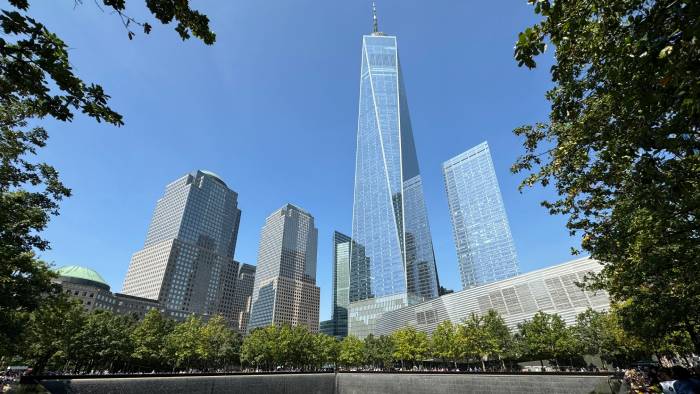
The tour concludes at the World Trade Center Transportation Hub, where structure, light, and movement combine in one of the city’s most expressive contemporary interiors. Designed as both transportation infrastructure and symbolic civic space, the Oculus reflects the evolving role of architecture in shaping collective urban experience in 21st-century New York.

Ending Point: Oculus World Trade Center

Key Themes

Origins of New York and Early Urban Identity
From New Amsterdam to British rule, the tour explores how early political and cultural forces shaped the city’s first civic and interior spaces.

Light, Space, and Symbolism in Architecture
From Gothic interiors to neoclassical order, discover how light, proportion, and geometry have been used to express meaning and authority.

Architecture as an Expression of Power and Capital
From banking halls to corporate lobbies, interiors reveal how institutions use space, materials, and scale to project stability, ambition, and influence.

From Ornament to Modernism
Trace the evolution from richly decorated Beaux-Arts and Art Deco interiors to the clarity, openness, and efficiency of modernist space.

Material, Detail, and Craft
Explore how materials, finishes, and construction techniques reflect the technologies, industries, and cultural values of each period.

Contemporary Interiors and Urban Experience
Understand how today’s interiors — from transit hubs to civic spaces — shape movement, perception, and everyday life in the city.

Meet Your Architect Guides

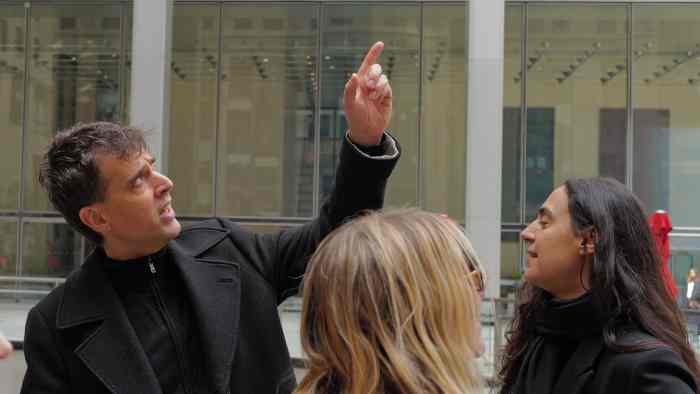
Our tours are led by architects and urban experts with deep knowledge of New York’s architecture, development, and city systems.

Each guide brings a unique perspective, combining professional experience with a passion for sharing the stories behind the city’s buildings and neighborhoods.

Tour Gallery

A glimpse into the architecture, streets, and spaces explored on this tour.

Practical Information

Accessibility

This tour involves moderate walking at a comfortable pace with regular stops. Some areas may include uneven surfaces. Please contact us in advance for specific accessibility needs.

What to Bring

Comfortable walking shoes and weather-appropriate clothing are recommended. In warmer months, bring water and sun protection. In cooler weather, dress in layers.

Weather Policy

Tours run rain or shine. In severe weather, we will contact you in advance to reschedule or provide alternatives.

Cancellation Policy

Public tours may be canceled or rescheduled up to 24 hours in advance for a full refund.

Private tours and group programs follow specific terms provided at booking.

Testimonials

Frequently Asked Questions


Is this tour suitable if I don’t have an architecture background?

Yes. Our tours are designed to be engaging and accessible to all visitors, whether you are an architecture enthusiast, a professional, or simply curious about the city.

Who is this tour designed for?

This tour is designed for architecture enthusiasts, cultural travelers, professionals, students, and curious New Yorkers interested in the intersection of architecture, urbanism, history, and city life.

How much walking is involved?

This is a walking tour covering approximately 1.5 miles. A moderate level of walking is required, with regular stops along the route.

Can this tour be customized?

Yes. Private tours and group programs can be tailored to your interests, schedule, and areas of focus.

   Still have some questions?

  Our team is happy to help you choose the right experience.

Discover New York Through Architecture

Join a public tour or plan a private experience tailored to your interests.

Explore More Architecture Tours in New York

Build Tours offers architecture tours across New York City’s most distinctive neighborhoods. Each experience is led by architects and urban experts who reveal the buildings, public spaces, and stories that shaped the city.