Hudson Yards Architecture Tour

Explore New York’s architecture and urban life through architect-led walking tours and experiences.

Tour Overview

Explore Hudson Yards, New York City’s most ambitious contemporary development, where architecture, infrastructure, engineering, and urban planning converge on Manhattan’s far West Side. This architect-led walking tour reveals how former rail yards and industrial infrastructure were transformed into a new district of residential towers, office buildings, cultural institutions, public spaces, and transportation infrastructure.

From landmark projects such as Vessel, The Shed, and The Spiral to the adaptive reuse of Moynihan Train Hall and the modernization of the Javits Center, the tour examines how large-scale planning, real estate investment, and architectural innovation continue to reshape the future of New York City. Together, these projects offer a compelling view of contemporary architecture and urban development at metropolitan scale.

Choose Your Experience

Choose the experience format that best fits your interests, schedule, and group size.

Public Tour

Small groups up to 10 guests
Duration: 2 hours
Language: English
Adults $59, Students $39

Private Tour

Flexible Size and Scheduling
Duration: 2 / 4 / 6 hours
In English, Spanish, Italian & French
Starting at $399

Group Program

Customized itineraries and themes
From 2 hours to multiple days
In English, Spanish, Italian & French
Price by request

Tour Highlights

Hudson Yards Master Plan (Kohn Pedersen Fox, 2018–present)
One of the largest private real estate developments in U.S. history, transforming active rail yards into a new district of offices, residences, public spaces, and cultural institutions.

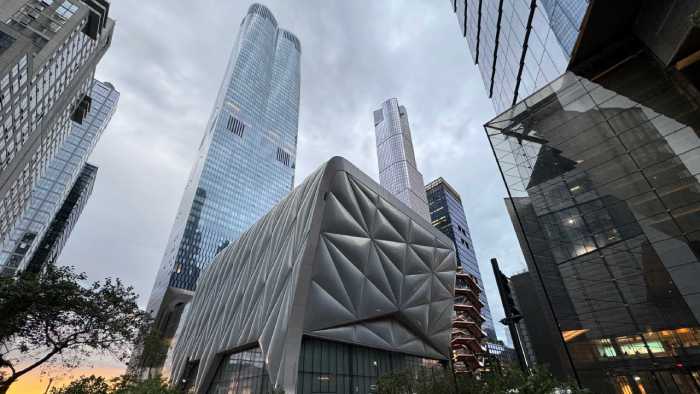
The Shed (Diller Scofidio + Renfro + Rockwell Group, 2019)
A flexible cultural building with a movable shell designed for multiple forms of performance and exhibition.

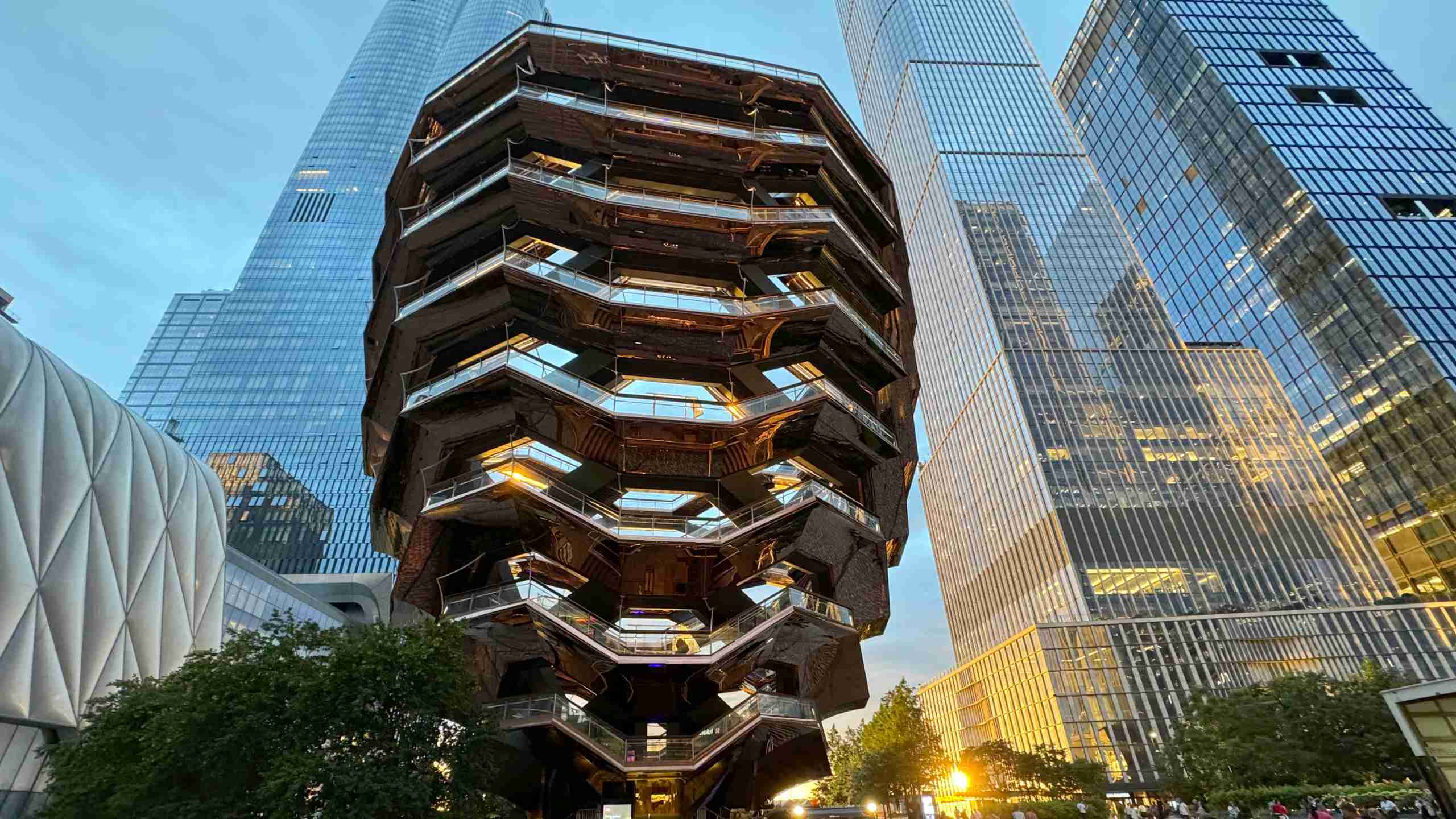
Vessel (Thomas Heatherwick Studio, 2019)
Thomas Heatherwick’s iconic interactive landmark, designed as a sculptural public space and one of the most recognizable symbols of Hudson Yards.

The Spiral (BIG – Bjarke Ingels Group, 2023)
Bjarke Ingels Group’s innovative office tower distinguished by landscaped terraces that spiral upward around the building’s façade.

Javits Center (Pei Cobb Freed, 1986; expansion by FXCollaborative, 2021)
New York’s premier convention center, reimagined through major sustainability upgrades, expanded public space, and contemporary architectural interventions.

Moynihan Train Hall (original Farley Post Office by McKim, Mead & White, 1914; SOM renovation, 2021)
A landmark adaptive reuse project that transformed the historic Farley Post Office into a contemporary civic gateway for New York City.

View Full List of Buildings and Sites on this Tour

A curated selection of buildings, public spaces, and infrastructure projects shaping the transformation of Manhattan’s far West Side.
Hudson Yards Master Plan (Kohn Pedersen Fox, 2018–present)
Vessel (Thomas Heatherwick Studio, 2019)
The Shed (Diller Scofidio + Renfro + Rockwell Group, 2019)
15 Hudson Yards (Diller Scofidio + Renfro + Rockwell Group, 2019)
35 Hudson Yards (SOM, 2019)
Javits Center (Pei Cobb Freed, 1986; expansion by FXCollaborative, 2021)
55 Hudson Yards (KPF + SOM, 2018)
7 Line Subway Entrance (Toshiko Mori Architect, 2015)
50 Hudson Yards (Foster + Partners, 2022)
The Spiral (BIG – Bjarke Ingels Group, 2023)
5 Manhattan West (REX, renovation completed 2017)
One Manhattan West (SOM, 2019)
Moynihan Train Hall (McKim, Mead & White; SOM renovation, 2021)

Itinerary

Meeting Point: Javits Center

This architect-led walking tour explores Hudson Yards, Manhattan West, and Moynihan Train Hall through a curated sequence of contemporary buildings, public spaces, infrastructure projects, and transportation hubs, revealing how New York’s far West Side became one of the most significant urban developments of the twenty-first century.

Javits Center and the West Side Transformation
We begin near the Javits Center, where large-scale infrastructure and convention development helped redefine Manhattan’s relationship with the Hudson River and opened the door for future westward expansion.

Hudson Yards — Planning Above the Rail Yards
Moving east toward Hudson Yards, we examine how active rail infrastructure was transformed into one of the largest private developments in the history of New York. Here, architecture, engineering, and real estate converge at metropolitan scale.

Public Space and Contemporary Placemaking
At the center of Hudson Yards, we encounter Vessel and the surrounding public plaza, exploring how contemporary developments use public space, landscape, and landmark architecture to create identity and attract urban activity.

The Shed and Mixed-Use Vertical Development
Around The Shed, 15 Hudson Yards, and 35 Hudson Yards, we examine how residential, cultural, hospitality, and commercial programs are integrated into a dense vertical neighborhood designed for contemporary urban living.

Corporate Architecture and the New Commercial Core
Continuing north and east, we encounter office towers such as 50 Hudson Yards, 55 Hudson Yards, and The Spiral, exploring how workplace architecture is evolving through new relationships between density, flexibility, sustainability, and public image.

Transit Infrastructure and Urban Connectivity
At the 7 Line Subway Entrance, we discuss the importance of transportation infrastructure in enabling large-scale urban expansion and reconnecting the far West Side to the rest of Manhattan.

Manhattan West and Adaptive Reuse
Moving through Manhattan West, we explore projects such as One Manhattan West and 5 Manhattan West, examining how contemporary development incorporates both new construction and the transformation of existing structures.

Moynihan Train Hall — Civic Architecture and Renewal
The tour concludes at Moynihan Train Hall, where the adaptive reuse of the historic Farley Post Office creates a new civic gateway for New York, reflecting ongoing efforts to rethink transportation, public space, and the future of the city.

Ending Point: Penn Station, Moynihan Train Hall

Key Themes

Urban Renewal and West Side Transformation
Explore how rail yards, industrial infrastructure, and underused land were transformed into a new district of residential, commercial, and cultural development on Manhattan’s far West Side.

Infrastructure and Structural Innovation
Discover the engineering strategies that made Hudson Yards possible, including large-scale construction above active rail infrastructure and new approaches to high-density urban development.

Architecture, Real Estate, and Global Capital
Understand how investment, development, and international capital have shaped the skyline and accelerated the growth of New York in the 21st century.

Flexible Architecture and Contemporary Culture
From The Shed’s movable structure to mixed-use vertical developments, explore how contemporary architecture adapts to changing cultural and urban needs.

Transportation, Civic Space, and Urban Connectivity
From the original Penn Station to Moynihan Train Hall and the 7 Line extension, trace how transportation infrastructure continues to reshape movement, identity, and public life in New York.

Modern and Contemporary Civic Architecture
Compare the modernist vision of the Javits Center with the adaptive reuse of Moynihan Train Hall, revealing changing ideas about monumentality, openness, and civic identity.

Meet Your Architect Guides

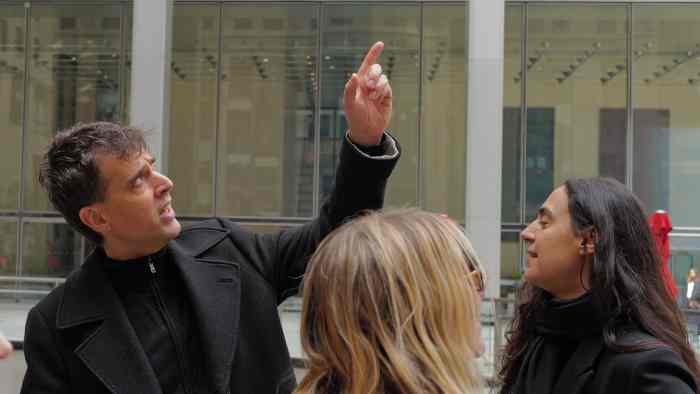
Our tours are led by architects and urban experts with deep knowledge of New York’s architecture, development, and city systems.

Each guide brings a unique perspective, combining professional experience with a passion for sharing the stories behind the city’s buildings and neighborhoods.

Tour Gallery

A glimpse into the architecture, streets, and spaces explored on this tour.

Practical Information

Accessibility

This tour involves moderate walking at a comfortable pace with regular stops. Some areas may include uneven surfaces. Please contact us in advance for specific accessibility needs.

What to Bring

Comfortable walking shoes and weather-appropriate clothing are recommended. In warmer months, bring water and sun protection. In cooler weather, dress in layers.

Weather Policy

Tours run rain or shine. In severe weather, we will contact you in advance to reschedule or provide alternatives.

Cancellation Policy

Public tours may be canceled or rescheduled up to 24 hours in advance for a full refund.

Private tours and group programs follow specific terms provided at booking.

Testimonials

Frequently Asked Questions


Is this tour suitable if I don’t have an architecture background?

Yes. Our tours are designed to be engaging and accessible to all visitors, whether you are an architecture enthusiast, a professional, or simply curious about the city.

Who is this tour designed for?

This tour is designed for architecture enthusiasts, cultural travelers, professionals, students, and curious New Yorkers interested in the intersection of architecture, urbanism, history, and city life.

How much walking is involved?

This is a walking tour covering approximately 1.5 miles. A moderate level of walking is required, with regular stops along the route.

Can this tour be customized?

Yes. Private tours and group programs can be tailored to your interests, schedule, and areas of focus.

   Still have some questions?

  Our team is happy to help you choose the right experience.

Discover New York Through Architecture

Join a public tour or plan a private experience tailored to your interests.

Explore More Architecture Tours in New York

Build Tours offers architecture tours across New York City’s most distinctive neighborhoods. Each experience is led by architects and urban experts who reveal the buildings, public spaces, and stories that shaped the city.