Upper East Side Architecture Tour

Explore New York’s architecture and urban life through architect-led walking tours and experiences.

Tour Overview

Discover the architectural and cultural evolution of the Upper East Side, one of New York’s most refined and historically layered neighborhoods. This architect-led walking tour explores how wealth, culture, landscape, and architectural ambition shaped Manhattan’s eastern edge from the Gilded Age to the present day.

From the grand mansions of Fifth Avenue and the rise of luxury apartment living to the world-renowned institutions of Museum Mile, the tour traces the transformation of the Upper East Side into a global center of culture, philanthropy, and architectural excellence. Along the way, participants encounter Beaux-Arts residences, elegant apartment houses, landmark museums, and significant works of modern and contemporary architecture.

Through institutions such as the Frick Collection, the Metropolitan Museum of Art, and the Guggenheim Museum, the tour examines the relationship between architecture, collecting, philanthropy, and public life. Together, these buildings reveal how generations of patrons, architects, and cultural leaders helped shape both the identity of the neighborhood and New York’s emergence as a global cultural capital.
Choose Your Experience

Choose the experience format that best fits your interests, schedule, and group size.

Public Tour

Small groups up to 10 guests
Duration: 2 hours
Language: English
Adults $59, Students $39

Private Tour

Flexible Size and Scheduling
Duration: 2 / 4 / 6 hours
In English, Spanish, Italian & French
Starting at $399

Group Program

Customized itineraries and themes
From 2 hours to multiple days
In English, Spanish, Italian & French
Price by request

Tour Highlights

Frick Collection (Carrère & Hastings, 1914)
A refined Gilded Age mansion transformed into one of New York’s most celebrated cultural institutions, combining Beaux-Arts elegance, art collecting, and residential grandeur.

Metropolitan Museum of Art (original building by Calvert Vaux and Jacob Wrey Mould, 1874; expansion by McKim, Mead & White, 1902)
One of the world’s great museums, reflecting the architectural and cultural ambitions of New York across multiple generations of expansion.

1040 Fifth Avenue (Rosario Candela, 1930)
An iconic prewar luxury apartment house representing the elegance, exclusivity, and refined residential architecture of the Upper East Side.

Solomon R. Guggenheim Museum (Frank Lloyd Wright, 1959)
An icon of modern architecture whose spiraling form radically redefined the relationship between museum space, movement, and the experience of art.

Former Whitney Museum / Sotheby’s Breuer / (Marcel Breuer, 1966)
A powerful Brutalist landmark distinguished by its sculptural concrete form, inverted windows, and monumental urban presence.

Central Park (Frederick Law Olmsted and Calvert Vaux, 1858)
A pioneering work of landscape architecture that transformed urban life and shaped the development of the Upper East Side as one of New York’s most prestigious residential districts.

View Full List of Buildings and Sites on this Tour

A curated selection of mansions, museums, cultural institutions, luxury residences, and landmark public spaces tracing the architectural evolution of the Upper East Side from the Gilded Age to contemporary New York.

Landscape, Urban Design, and Monuments
Central Park (Frederick Law Olmsted and Calvert Vaux, 1858)
Cleopatra’s Needle (ancient Egyptian obelisk, installed 1881)

Gothic Revival and Romanesque Architecture
Ukrainian Institute of America / Fletcher-Sinclair Mansion (C. P. H. Gilbert, 1897)
Rhinelander Mansion / Ralph Lauren Flagship (Kimball & Thompson, 1898)
Park Avenue Christian Church (Cram, Goodhue & Ferguson, 1911)

Beaux-Arts and Gilded Age Mansions
Frick Collection / Henry Clay Frick House (Carrère & Hastings, 1914)
Benjamin N. Duke House (Welch, Smith & Provot, 1901)
Institute of Fine Arts / James B. Duke House (Horace Trumbauer, 1912)
Neue Galerie (Carrère & Hastings, 1914)
French Consulate (Walker & Gillette, 1926)
Cooper Hewitt Smithsonian Design Museum / Carnegie Mansion (Babb, Cook & Willard, 1901)
Metropolitan Club (McKim, Mead & White, 1893–1912)
Harmonie Club (McKim, Mead & White, 1904–1906)

Museums and Institutional Architecture
Metropolitan Museum of Art (Calvert Vaux and Jacob Wrey Mould, 1874; McKim, Mead & White expansion, 1902)
Museum of the City of New York (Joseph H. Freedlander, 1932)
National Academy of Design Museum (Ogden Codman Jr., 1901)

Luxury Apartment Houses and Prewar Urban Living
998 Fifth Avenue (McKim, Mead & White, 1912)
960 Fifth Avenue (Warren & Wetmore, 1927)
1040 Fifth Avenue (Rosario Candela, 1930)
Temple Emanu-El (Robert D. Kohn, Charles Butler & Clarence Stein, 1929–1930)

Modernism and Brutalism
Solomon R. Guggenheim Museum (Frank Lloyd Wright, 1959)
The Met Breuer / former Whitney Museum (Marcel Breuer, 1966)

Itinerary

Meeting Point: The Frick Collection

This architect-led walking tour explores the Upper East Side through a curated sequence of mansions, museums, cultural institutions, and public spaces, tracing the transformation of the neighborhood from Gilded Age residential enclave to one of the world’s most prestigious cultural districts.

Fifth Avenue and the Gilded Age
We begin at the Frick Collection, where the elegance of Carrère & Hastings’ mansion architecture introduces the world of New York’s industrial elite. Along Fifth Avenue, historic mansions, cultural institutions such as the Neue Galerie, the French Consulate,, and landmark residences reveal how wealth, philanthropy, and architectural ambition transformed the avenue into the city’s most prestigious residential corridor.

Madison Avenue and Cultural Institutions
Moving along Madison Avenue, we encounter a collection of cultural institutions, galleries, and distinguished residential buildings that reflect the neighborhood’s strong European influences. This section explores how collecting, diplomacy, and cultural patronage contributed to the Upper East Side’s international character and enduring prestige.

Modern Museum Architecture
Continuing north, we arrive at Sotheby’s Breuer, Marcel Breuer’s powerful Brutalist landmark originally designed for the Whitney Museum of American Art. Here, we examine the arrival of modern architecture on the Upper East Side and its striking contrast with the surrounding historic streetscape.

Museum Mile and Central Park
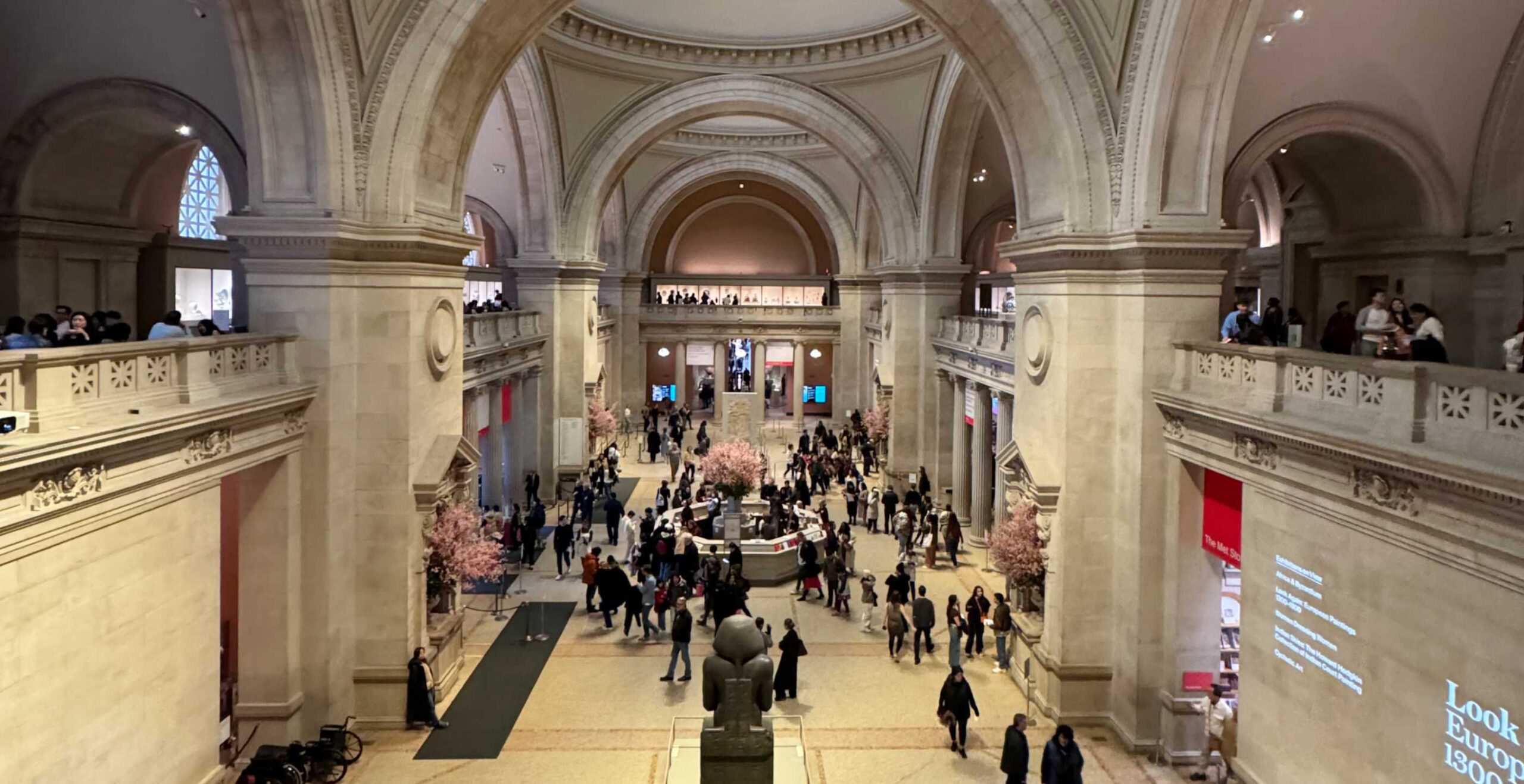
Along Fifth Avenue and the edge of Central Park, we explore how landscape architecture, museums, and monumental civic institutions shaped the identity of the Upper East Side. At the Metropolitan Museum of Art, we examine the evolution of one of the world’s great museums and its role in establishing New York as a global cultural capital.

The Guggenheim and the Reinvention of Museum Space
The tour concludes at the Solomon R. Guggenheim Museum, Frank Lloyd Wright’s revolutionary spiraling museum that transformed the relationship between architecture, movement, and the experience of art.

Today, the neighborhood remains one of New York’s most enduring expressions of architectural prestige, cultural patronage, and urban sophistication.

Ending Point: Solomon R. Guggenheim Museum

Key Themes

Central Park and Urban Transformation
Explore how Central Park reshaped Upper Manhattan and established the Upper East Side as one of New York’s most prestigious residential districts.

Gilded Age Mansions and Fifth Avenue Society
Discover how industrial wealth, social ambition, and architectural patronage shaped the grand residences, institutions, and urban identity of Fifth Avenue.

From Mansions to Luxury Apartment Living
Trace the evolution of elite residential life as private estates gradually gave way to luxury apartment houses and cooperative living along Fifth and Park Avenue.

Museum Mile and Cultural Patronage
Examine how museums, collectors, philanthropists, and cultural institutions transformed the Upper East Side into one of the world’s most influential centers of art and intellectual life.

Modern Architecture and the Reinvention of Cultural Space
From the Guggenheim Museum to the former Whitney Museum, explore how modern architecture introduced new ideas about form, movement, and the experience of art within the historic fabric of the neighborhood.

Meet Your Architect Guides

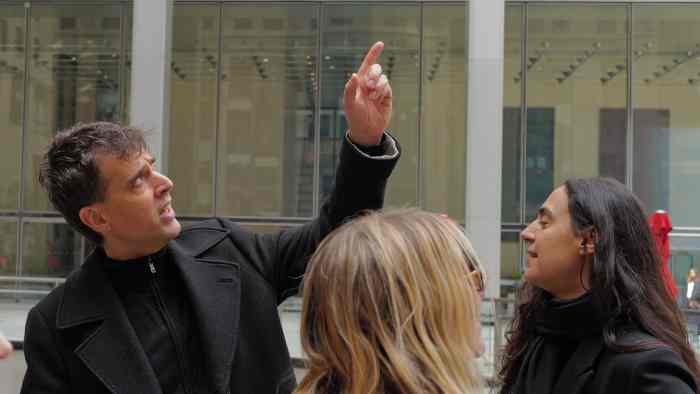
Our tours are led by architects and urban experts with deep knowledge of New York’s architecture, development, and city systems.

Each guide brings a unique perspective, combining professional experience with a passion for sharing the stories behind the city’s buildings and neighborhoods.

Tour Gallery

A glimpse into the architecture, streets, and spaces explored on this tour.

Practical Information

Accessibility

This tour involves moderate walking at a comfortable pace with regular stops. Some areas may include uneven surfaces. Please contact us in advance for specific accessibility needs.

What to Bring

Comfortable walking shoes and weather-appropriate clothing are recommended. In warmer months, bring water and sun protection. In cooler weather, dress in layers.

Weather Policy

Tours run rain or shine. In severe weather, we will contact you in advance to reschedule or provide alternatives.

Cancellation Policy

Public tours may be canceled or rescheduled up to 24 hours in advance for a full refund.

Private tours and group programs follow specific terms provided at booking.

Testimonials

Brilliant. Ivan showed us some fantastic buildings including the Guggenheim but also lesser well known ones including the first luxury home in NYC. The breadth and depth of coverage was excellent and you feel like you understand New York a lot better afterwards. Highly recommend!

Kapil S.

Starting from the Frick Collection to all the iconic pearls of the Upper East Side, Ivan's tour covered a range of urban history such as the Gilded Age. Honoring these historic layers of residential and commercial dynamism was truly special. Had been many times, but nothing quite like this. I really enjoyed the historical preservation insights as well as the urban planning.

Gabriela C.

Frequently Asked Questions


Is this tour suitable if I don’t have an architecture background?

Yes. Our tours are designed to be engaging and accessible to all visitors, whether you are an architecture enthusiast, a professional, or simply curious about the city.

Who is this tour designed for?

This tour is designed for architecture enthusiasts, cultural travelers, professionals, students, and curious New Yorkers interested in the intersection of architecture, urbanism, history, and city life.

How much walking is involved?

This is a walking tour covering approximately 1.5 miles. A moderate level of walking is required, with regular stops along the route.

Can this tour be customized?

Yes. Private tours and group programs can be tailored to your interests, schedule, and areas of focus.

   Still have some questions?

  Our team is happy to help you choose the right experience.

Discover New York Through Architecture

Join a public tour or plan a private experience tailored to your interests.

Explore More Architecture Tours in New York

Build Tours offers architecture tours across New York City’s most distinctive neighborhoods. Each experience is led by architects and urban experts who reveal the buildings, public spaces, and stories that shaped the city.