Financial District Architecture Tour

Explore New York’s architecture and urban life through architect-led walking tours and experiences.

Tour Overview

The Financial District is where New York began. Within its compact street network, historic landmarks, early skyscrapers, civic institutions, and contemporary towers reveal how commerce, government, finance, and architecture shaped the evolution of the city over more than four centuries.

This architect-led walking tour traces the transformation of Lower Manhattan from a colonial settlement and maritime trading center into a global capital of finance and culture. From early civic monuments and Beaux-Arts institutions to Art Deco skyscrapers, modernist plazas, and the contemporary redevelopment of the World Trade Center, the tour reveals how each generation reshaped the city in response to changing economic, political, and technological forces.

Along the way, participants encounter landmark buildings such as Castle Clinton, Federal Hall, Trinity Church, One Wall Street, and the World Trade Center complex. Together, these buildings tell the story of New York’s growth from a small port city into one of the world’s most influential urban centers.

Today, Lower Manhattan remains one of the most layered and dynamic districts in New York, where centuries of architectural history coexist within a constantly evolving global city.
Choose Your Experience

Choose the experience format that best fits your interests, schedule, and group size.

Public Tour

Small groups up to 10 guests
Duration: 2 hours
Language: English
Adults $59, Students $39

Private Tour

Flexible Size and Scheduling
Duration: 2 / 4 / 6 hours
In English, Spanish, Italian & French
Starting at $399

Group Program

Customized itineraries and themes
From 2 hours to multiple days
In English, Spanish, Italian & French
Price by request

Tour Highlights

Castle Clinton (1811)
An early fort that later served as an immigration station, cultural venue, and aquarium.

Federal Hall (Town & Davis, 1842)
A Greek Revival landmark of American history and architecture where George Washington took the oath of office as the first President of the United States.

Trinity Church (Richard Upjohn, 1846)
Richard Upjohn’s Gothic Revival masterpiece and one of Lower Manhattan’s most iconic architectural landmarks, standing in dramatic contrast to the surrounding financial district skyline.

Custom House (Cass Gilbert, 1907-12)
A monumental neoclassical building reflecting the power of early federal institutions with its Beaux-Arts style.

One Wall Street (Ralph Walker, 1930)
Ralph Walker’s Art Deco masterpiece and one of New York City’s most celebrated skyscrapers, renowned for its dramatic massing and the iconic Red Room interior.

Chase Manhattan Building and Plaza (SOM, 1960) 
A transformative modernist development that redefined the relationship between corporate towers, public space, and urban planning in Lower Manhattan.

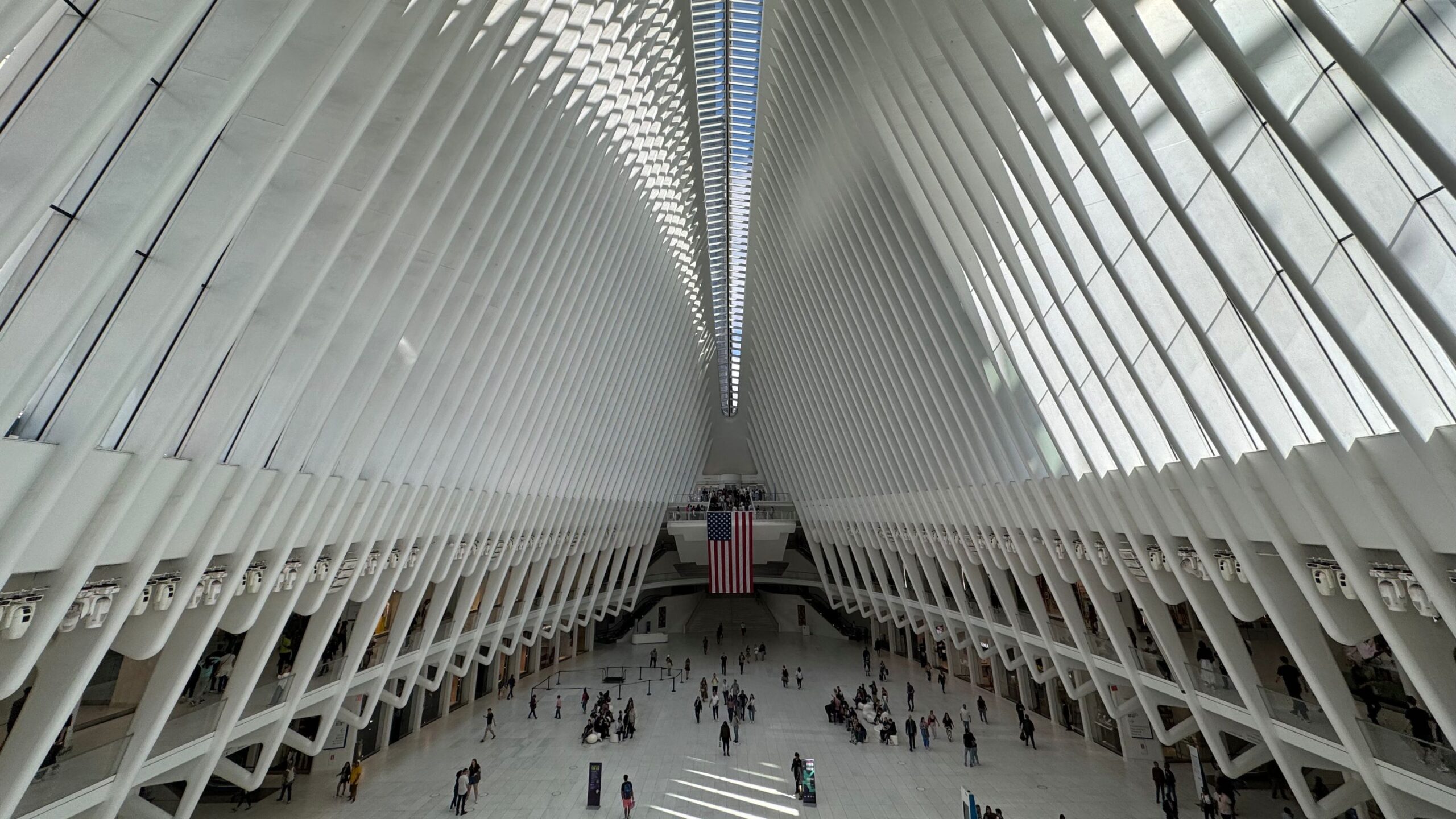
Oculus PATH Station (Santiago Calatrava, 2015)
Santiago Calatrava’s dramatic transportation hub and one of the most recognizable contemporary architectural landmarks in New York City.

View Full List of Buildings and Sites on this Tour

This tour includes a curated selection of buildings, streets, and public spaces that trace the evolution of Lower Manhattan from its origins to the present day.

Early New York & Colonial Origins

Lenape settlement site

  • Arrival of early explorers: Giovanni da Verrazzano (1524), Henry Hudson (1609)

  • Dutch New Amsterdam (1624–1664)

  • New Amsterdam city wall (1653) — origin of Wall Street

  • Stone Street — one of New York’s oldest streets

  • Fraunces Tavern (1723)

  • James Watson House (1793–1806)

  • Schermerhorn Row (1810–1812)

  • Castle Clinton (1811)

Civic & Institutional Architecture

  • Federal Hall (Town & Davis, 1842)

  • Custom House (Cass Gilbert, 1907–1912)

  • Federal Reserve Bank of New York (1924)

Gothic & Early Skyscraper Era

  • Trinity Church (Frederick Clarke Withers, 1846)

  • Woolworth Building (Cass Gilbert, 1914)

Art Deco & Early Corporate Identity

  • One Wall Street (Ralph Walker, 1930)

Modernism & Urban Transformation

  • Chase Manhattan Plaza (Skidmore, Owings & Merrill, 1960)

  • Marine Midland Building / HSBC Tower (Gordon Bunshaft, SOM, 1967)

    – including Noguchi’s Red Cube

Postmodern Developments

  • 60 Wall Street (Kevin Roche & John Dinkeloo, 1988)

Contemporary Architecture & Infrastructure

  • 8 Spruce Street (Frank Gehry, 2010)

  • Fulton Transit Center (Grimshaw, 2015)

World Trade Center Complex

  • One World Trade Center (David Childs, SOM, 2015)

  • Oculus PATH Station (Santiago Calatrava, 2015)

  • St. Nicholas Greek Orthodox Church (Santiago Calatrava, 2020)

  • Perelman Performing Arts Center (REX, 2023)

  • 9/11 Museum Pavilion (Snøhetta, 2014)

Public Spaces, Parks & Memorials

  • Bowling Green (est. 1733) — New York’s oldest public park

  • Battery Park — waterfront public space

  • Zuccotti Park (Cooper Robertson, 2006)

  • 9/11 Memorial (Michael Arad & Peter Walker, 2011)

Itinerary

Meeting Point: Castle Clinton National Monument

This architect-led walking tour follows the evolution of Lower Manhattan from a colonial settlement and trading port to a global center of finance, commerce, architecture, and culture through a curated sequence of historic landmarks, skyscrapers, public spaces, and civic institutions.

Battery Park and Castle Clinton
We begin at Battery Park, where New York’s relationship with trade, defense, immigration, and the harbor first shaped its development. This opening section traces the evolution of the city from Indigenous settlement to Dutch and British colonial rule, establishing the foundations for New York’s future growth.

Broadway and the Rise of Commercial New York
Moving north along Broadway, we explore the emergence of New York’s commercial and civic center through a sequence of institutional landmarks that reflect the growing political and economic influence of the city during the 18th and 19th centuries.

Wall Street and the Financial Core
Buildings such as the Equitable Building, One Wall Street, the New York Stock Exchange, and surrounding financial institutions reveal how architecture became intertwined with commerce, finance, and the emergence of the modern skyscraper city.

Pine and Cedar Streets
Through the narrow streets and dense urban fabric of Lower Manhattan, we examine how growth, land constraints, and technological innovation shaped one of the most concentrated business districts in the world.

Chase Manhattan Plaza
At Chase Manhattan Plaza, we explore the mid-20th-century transformation of Lower Manhattan and the emergence of modernist planning, corporate architecture, and new relationships between towers and public space.

World Trade Center and Contemporary Transformation
The tour concludes at the World Trade Center, where architecture, infrastructure, memorialization, and redevelopment reflect the resilience and ongoing evolution of Lower Manhattan in the 21st century.

Ending Point: Oculus World Trade Centre

Key Themes

New York’s Origins and Urban Growth
Explore how Lower Manhattan evolved from a colonial settlement and trading port into the economic and civic center of New York City.

Finance, Commerce, and Power
Examine how architecture became a tool for expressing financial authority, institutional identity, and economic influence.

The Rise of the Skyscraper
Discover how technological innovation, land values, and commercial ambition transformed Lower Manhattan into the birthplace of the modern skyscraper city.

Public Space and Urban Form
From historic streets and civic spaces to modern plazas and waterfront parks, explore how public space shapes the experience of the city.

Continuity and Reinvention
Trace how Lower Manhattan continues to evolve through redevelopment, adaptive reuse, and contemporary architecture while preserving layers of its historic past.

Meet Your Architect Guides

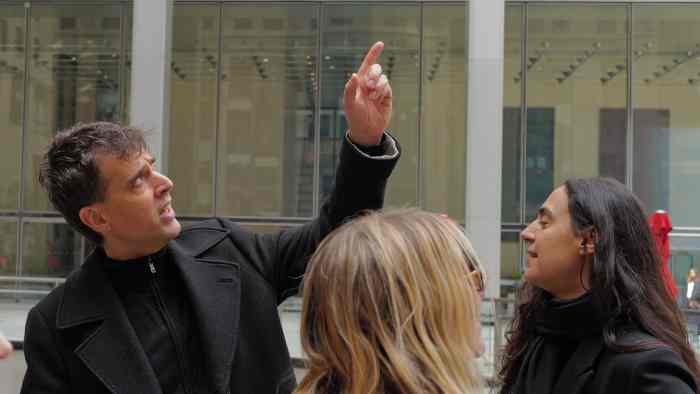
Our tours are led by architects and urban experts with deep knowledge of New York’s architecture, development, and city systems.

Each guide brings a unique perspective, combining professional experience with a passion for sharing the stories behind the city’s buildings and neighborhoods.

Tour Gallery

A glimpse into the architecture, streets, and spaces explored on this tour.

Practical Information

Accessibility

This tour involves moderate walking at a comfortable pace with regular stops. Some areas may include uneven surfaces. Please contact us in advance for specific accessibility needs.

What to Bring

Comfortable walking shoes and weather-appropriate clothing are recommended. In warmer months, bring water and sun protection. In cooler weather, dress in layers.

Weather Policy

Tours run rain or shine. In severe weather, we will contact you in advance to reschedule or provide alternatives.

Cancellation Policy

Public tours may be canceled or rescheduled up to 24 hours in advance for a full refund.

Private tours and group programs follow specific terms provided at booking.

Testimonials

Ivan was incredibly articulate in sharing the rich history and intricate architectural details of the buildings, clearly drawing from his extensive background and deep passion for architecture. His ability to bring the structures to life through storytelling made the tour both educational and inspiring. I learned so much and am genuinely excited to attend another tour soo. It was truly a memorable experience.

Jill

This NYC Architecture Financial District tour was exceptional from beginning to end. Starting at Castle Clinton and finishing at the World Trade Center, the route told a clear and fascinating story of New York’s architectural evolution. Our tour guide was outstanding—knowledgeable, engaging, and genuinely passionate about the city’s history and design. The tour was well paced and informative. Highly recommended for anyone interested in architecture, design, or New York City itself.

Cindy Z.

Frequently Asked Questions


Is this tour suitable if I don’t have an architecture background?

Yes. Our tours are designed to be engaging and accessible to all visitors, whether you are an architecture enthusiast, a professional, or simply curious about the city.

Who is this tour designed for?

This tour is designed for architecture enthusiasts, cultural travelers, professionals, students, and curious New Yorkers interested in the intersection of architecture, urbanism, history, and city life.

How much walking is involved?

This is a walking tour covering approximately 1.5 miles. A moderate level of walking is required, with regular stops along the route.

Can this tour be customized?

Yes. Private tours and group programs can be tailored to your interests, schedule, and areas of focus.

   Still have some questions?

  Our team is happy to help you choose the right experience.

Discover New York Through Architecture

Join a public tour or plan a private experience tailored to your interests.

Explore More Architecture Tours in New York

Build Tours offers architecture tours across New York City’s most distinctive neighborhoods. Each experience is led by architects and urban experts who reveal the buildings, public spaces, and stories that shaped the city.