This architect-led walking tour explores Morningside Heights through a curated sequence of university campuses, cathedrals, civic monuments, parks, and contemporary academic buildings, revealing how architecture and urban planning shaped one of New York City’s most influential intellectual districts.
St. John the Divine and the Gilded Age Ambitions of New York
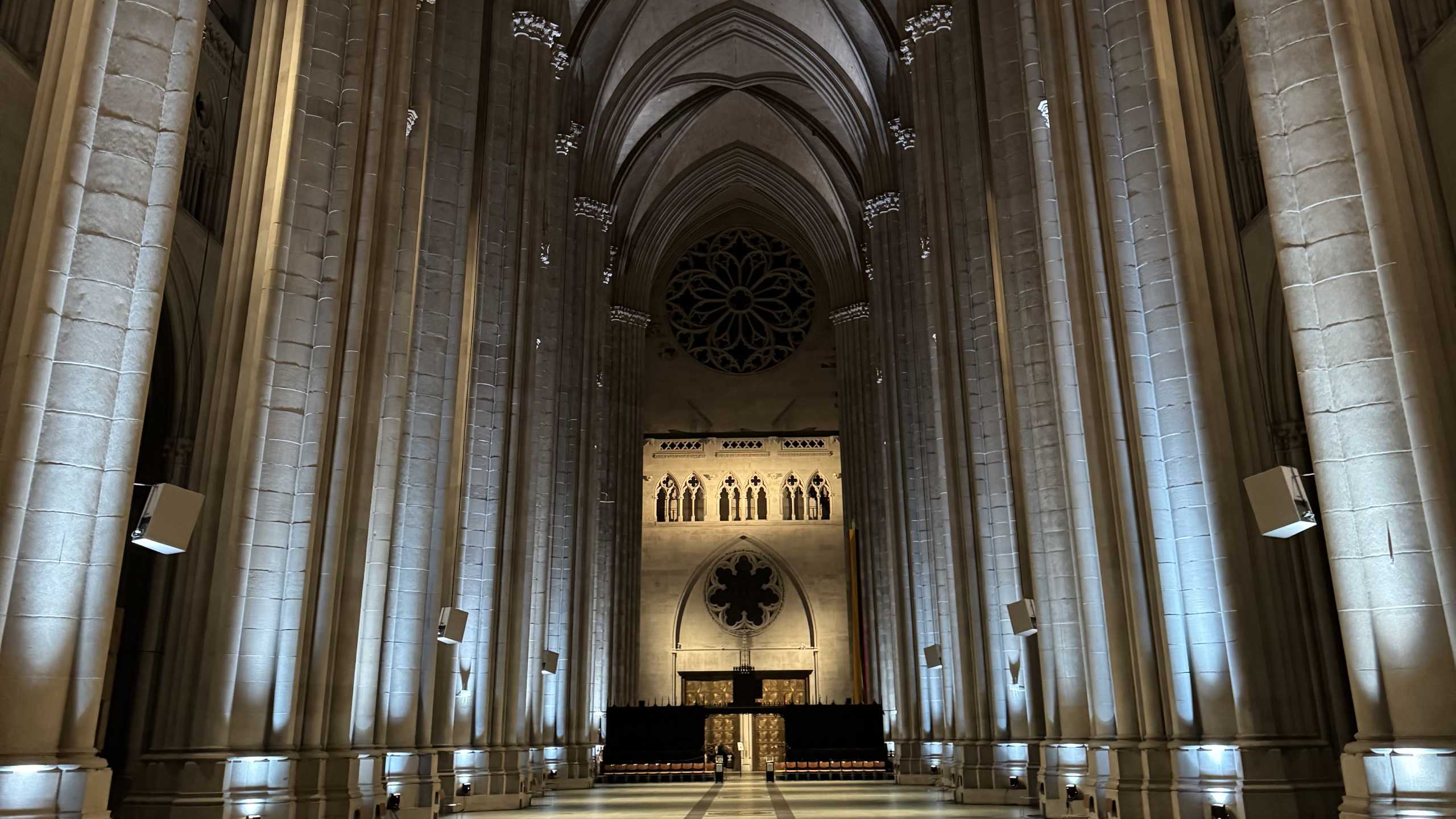
We begin at the Cathedral of St. John the Divine, one of the world’s largest Gothic cathedrals and one of New York’s most ambitious religious and civic projects. Here, we examine how Gothic Revival architecture, monumental scale, craftsmanship, and symbolism reflected the cultural aspirations of New York during the late 19th and early 20th centuries.
Nearby, the Peace Fountain introduces a contrasting contemporary artistic intervention, while the dramatic topography of Morningside Park reveals how landscape and geography shaped the development of Upper Manhattan.
Columbia University and the City Beautiful Campus
Moving west toward Columbia University, we explore one of the most influential Beaux-Arts academic campuses in the United States. Designed by McKim, Mead & White, the Columbia master plan established a monumental urban composition organized around symmetry, axial planning, landscape, and civic space.
Buildings such as Butler Library reveal how architecture became an expression of institutional identity, intellectual ambition, and academic prestige at the turn of the 20th century.
Contemporary Academic Architecture and Campus Life
As the university evolved, contemporary projects introduced new ideas about transparency, circulation, student life, and interdisciplinary learning. Through Lerner Hall by Bernard Tschumi, the Diana Center at Barnard College by Weiss/Manfredi, and the Northwest Corner Building by Rafael Moneo, we examine how contemporary architecture transformed the relationship between academic institutions and the surrounding city while redefining the experience of campus life in the 21st century.
Religion, Philanthropy, and the Skyline of Upper Manhattan
Continuing west toward Riverside Drive, we encounter Emmanuel Presbyterian Church, Union Theological Seminary, International House, and Riverside Church — institutions that shaped Morningside Heights as a global center of religion, education, diplomacy, and intellectual exchange.
This section explores how neo-Gothic architecture, philanthropy, and internationalism contributed to the distinctive skyline and cultural identity of Upper Manhattan during the early 20th century.
Riverside Park and the Monumental Landscape of Memory
The tour concludes within the landscapes of Sakura Park and Riverside Park overlooking the Hudson River. Here, we examine how landscape architecture, memorial space, and civic monumentality shaped the western edge of Manhattan through picturesque planning, international cultural exchange, and public memory.
At Grant’s Tomb, one of New York’s great civic monuments, we reflect on how Morningside Heights evolved through the interaction of universities, religious institutions, parks, and monumental architecture into one of New York’s most intellectually and culturally significant neighborhoods.